

I. Overview of HDPE Pipe Extrusion Line
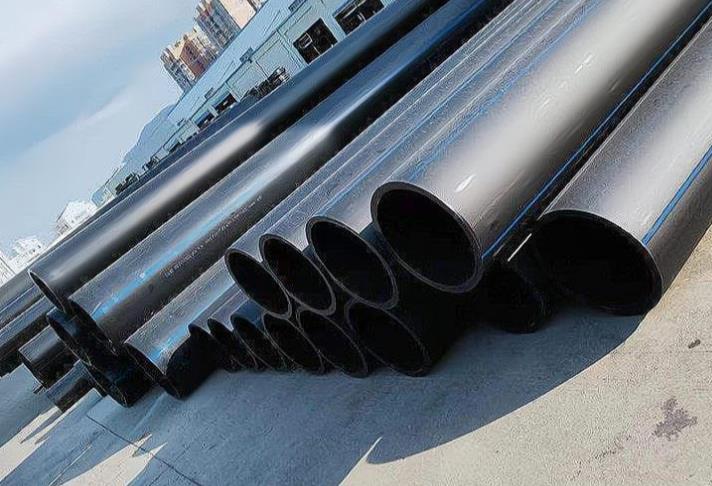
HDPE (High-Density Polyethylene) pipe extrusion line is a highly efficient and automated equipment that converts HDPE granules into continuous pipes. Widely used in water supply, drainage, gas transmission, and industrial piping systems, this technology offers advantages such as high production efficiency, stable product quality, and excellent cost-effectiveness. It can produce various pipes with diameters ranging from 16mm to 1600mm.
II. Core Composition of HDPE Pipe Extrusion Line
1. Raw Material Handling System
- Loading Device: Vacuum loader transports HDPE granules from the storage silo to the drying system.
- Drying System: Hopper dryer removes moisture from raw materials to ensure extrusion quality.
- Mixing Device: Used for adding masterbatches and additives (e.g., UV stabilizers, flame retardants) to achieve uniform mixing.
2. Extrusion System (Core of the Production Line)
Single-Screw Extruder:
- Hopper: Stores and feeds raw materials into the extruder.
- Screw & Barrel: Core components, typically designed with a 40L/D length-to-diameter ratio (higher ratio ensures better plasticization).
- Heating System: Multi-zone electric heating (usually 180-220℃) provides heat for melting.
- Cooling System: Controls the temperature of the screw and barrel to prevent overheating and degradation.
- Drive Unit: Variable frequency motor + reducer delivers stable torque (usually 200-600kW).
Technical Features:
- Compared with the traditional 38D model, the 40L/D design increases output by 50%, reduces energy consumption by 15%, and lowers melt temperature by 10℃.
- Bimetallic alloy barrel combined with alloy-coated screw solves the sagging problem of large-diameter pipes.
3. Die System (Determines Pipe Shape)
Die Head Structure:
- Spreader (Torpedo Head): Splits the melt into a thin annular flow for uniform distribution.
- Spiral Flow Channel: Guides the melt to flow in a spiral path, eliminating weld lines and improving uniformity.
- Mandrel & Die Lip: Forms an annular gap that determines the inner diameter and wall thickness of the pipe.
- Sizing Section: Ensures uniform extrusion of the melt and stable dimensional accuracy.
Common Types:
- Basket Die: Melt flows radially, suitable for multi-layer co-extrusion.
- Spiral Die: Melt flows spirally, eliminates weld seams, suitable for high-speed production.
4. Cooling & Sizing System
Vacuum Sizing Tank:
- The pipe adheres closely to the sizing sleeve through vacuum suction to precisely control the outer diameter (vacuum degree: approximately 0.03-0.08MPa).
- Internal spray cooling accelerates the solidification of the outer layer and prevents deformation.
- Length: Usually 6-12 meters to ensure sufficient cooling.
Cooling Water Tank:
- Multi-stage design with water temperature controlled at 10-30℃ to ensure uniform internal and external cooling.
- Typically includes 2-3 independent water tanks to gradually reduce temperature and minimize internal stress.
5. Haul-Off System
- Track-Type Hauler: Rubber tracks clamp the pipe to provide stable traction (speed: 1-25m/min).
- Independent servo motor drive ensures synchronization with extrusion speed to prevent stretching or compression deformation.
- High-precision encoder monitors speed in real-time and automatically adjusts traction tension.
6. Cutting System
- Planetary Cutter: Rotating blades cut along the pipe circumference, suitable for large-diameter pipes.
- Chip-Free Cutter: Uses high-speed rotating blades to fuse the pipe through frictional heat, producing no chips and saving materials (suitable for wall thickness ≤200mm).
- Servo control system precisely controls the cutting length (accuracy: ±1mm) and supports presetting of multiple length specifications.
7. Auxiliary Systems
- Marker Line Extruder: Independent small extruder that extrudes colored marker lines on the pipe surface.
- Inkjet Printer: Prints specifications, batch numbers, production dates, and other information.
- Pipe Turner/Coiler: Automatically stacks or coils finished products according to pipe diameter.
- Central Control System: PLC + touch screen for full-line monitoring, parameter adjustment, fault diagnosis, and alarm.
III. Detailed Working Principle of HDPE Pipe Extrusion
1. Raw Material Preparation Stage
- HDPE granules (melt flow rate: 0.1-10g/10min) are mixed with additives and transported to the drying hopper via a vacuum loading system.
- Drying process (usually 80-100℃ for 2-4 hours) removes moisture to prevent bubble formation during extrusion.
2. Melting & Plasticization Stage (Inside the Extruder)
Three Stages of Material Transformation:
Solid Granules → High-Elastic State → Viscous Flow State (Melt)
Workflow:
- Granules enter the feeding section of the screw from the hopper and move forward under the push of the rotating screw.
- Compression Section: The depth of the screw groove decreases, compressing the material and increasing its temperature (150-180℃).
- Melting Section: The material is fully melted (180-220℃) through the combined action of external heating and mechanical shear.
- Metering Section: The melt is further mixed uniformly to form a stable flow, ready for extrusion.
Key Parameters:
- Melt Temperature: 180-220℃ (excessively high temperature causes degradation; excessively low temperature results in poor fluidity).
- Screw Speed: 20-120rpm (adjusted according to pipe diameter; lower speed for large pipes).
- Extrusion Pressure: 10-30MPa (ensures uniform melt extrusion).
3. Die Forming Stage
- The molten material passes through a filter plate (usually 80-120 mesh) to remove impurities and converts from rotational motion to linear motion.
- Inside the die, the melt is uniformly distributed by the spreader and further mixed in the spiral/basket flow channel.
- The melt is extruded through the gap between the mandrel and die lip (usually 1.2-1.5 times the pipe wall thickness) to form a tubular parison.
Key Die Design Considerations:
- Smooth transition of flow channels to avoid material degradation caused by dead corners.
- Precise temperature control (usually 5-10℃ lower than the melt temperature) to ensure extrusion stability.
- The die lip gap is wider at the top and narrower at the bottom (0.5-1°) to compensate for melt sagging.
4. Cooling & Sizing Stage
Vacuum Sizing Principle:
- Immediately after exiting the die, the pipe enters the vacuum tank, where external vacuum (-0.03 to -0.08MPa) makes the pipe adhere to the sizing sleeve.
- Cooling water circulates inside the sizing sleeve to quickly cool the outer layer and fix the shape (cooling rate: 50-100℃/s).
Function of Cooling Water Tank:
- Further cools the inner part of the pipe to ensure complete solidification (temperature after cooling <40℃).
- Multi-stage cooling design prevents internal stress caused by rapid cooling and ensures dimensional stability.
5. Haul-Off & Cutting Stage
- The hauler pulls the pipe at a constant speed synchronized with the extrusion speed to maintain continuous production.
- The cutting system precisely cuts the pipe to the preset length (usually 6-12 meters) with a servo-controlled mechanism, ensuring flat cuts.
- The finished pipes are automatically stacked or coiled by the pipe turner/coiler, completing a production cycle.
IV. Technical Parameters & Process Control of HDPE Pipe Extrusion
| Parameter Category | Parameter Values | Impact & Control |
|---|---|---|
| Extruder Parameters | ||
| Screw Diameter | 45-120mm (selected by pipe diameter) | Larger screw diameter for large pipes to increase output. |
| Length-to-Diameter Ratio (L/D) | 30:1-40:1 | Improves plasticization uniformity and reduces melt temperature. |
| Screw Speed | 10-120rpm | High speed increases output but may reduce plasticization quality. |
| Melt Temperature | 180-220℃ | Affects fluidity and pipe performance; precise temperature control (±2℃). |
| Die Parameters | ||
| Die Lip Gap | 1.2-1.5×pipe wall thickness | Compensates for cooling shrinkage to ensure final dimensions. |
| Die Temperature | 5-10℃ lower than melt temperature | Prevents melt adhesion to the die and stabilizes extrusion. |
| Cooling Parameters | ||
| Vacuum Degree | 0.03-0.08MPa | Ensures pipe adherence to the sizing sleeve and controls outer diameter accuracy. |
| Cooling Water Temperature | 10-30℃ | Controls cooling rate to prevent internal stress. |
| Cooling Time | 1-5 minutes (depending on wall thickness) | Ensures complete solidification and prevents deformation. |
| Production Line Speed | ||
| Haul-Off Speed | 0.5-25m/min (lower for larger diameters) | PE63 (16-63mm): max 20m/min; PE1600 (710-1600mm): approx. 0.8m/min |
V. Common Problems & Solutions in HDPE Pipe Extrusion
1. Surface Defects
Rough Surface:
- Cause: Low die temperature, uneven cooling, high moisture content in raw materials.
- Solution: Increase die temperature by 5-10℃, check cooling water circuits, extend drying time.
Uneven Gloss:
- Cause: Fluctuations in melt temperature, unstable extrusion speed.
- Solution: Stabilize the temperature control system, check screw speed stability, increase back pressure.
2. Dimensional Accuracy Issues
Uneven Wall Thickness:
- Cause: 不合理 die flow channel design, uneven melt flow, uneven cooling.
- Solution: Optimize die structure, adjust die lip gap (wider top, narrower bottom), check cooling uniformity.
Poor Roundness:
- Cause: Insufficient vacuum degree, uneven cooling, uneven traction force.
- Solution: Increase vacuum degree, adjust cooling water distribution, check haul-off track pressure.
3. Performance Defects
Inner Surface Corrugation:
- Cause: Excessively high mandrel temperature, fluctuations in melt pressure, unstable haul-off.
- Solution: Reduce mandrel temperature, stabilize extrusion pressure, check haul-off synchronization.
Melt Fracture (Sharkskin Surface):
- Cause: Excessively high extrusion speed, high melt viscosity.
- Solution: Reduce extrusion speed, increase die temperature by 10-15℃, add 0.5-1% processing aids.
VI. Technical Advantages & Application Fields of HDPE Pipe Extrusion
Technical Advantages
- Superior Performance: Chemical resistance, environmental stress crack resistance, and high toughness (maintains excellent impact resistance even at low temperatures).
- Economy: High production efficiency (single line daily output up to several thousand meters), low energy consumption (approx. 0.31kWh/kg).
- Long Service Life: Designed service life of over 50 years, reducing maintenance and replacement costs.
- Versatility: Capable of producing pipes of various specifications (16-1600mm) and pressure ratings (0.6-2.5MPa).
- Environmental Friendliness: Recyclable and reusable, in line with sustainable development concepts.
Application Fields
- Municipal Engineering: Drinking water transmission, sewage treatment, rainwater drainage.
- Industrial Sector: Chemical fluid transmission, mine tailings pipelines, power cable protection.
- Agricultural Irrigation: Drip irrigation and sprinkler irrigation system pipelines.
- Gas Transmission: Natural gas and liquefied gas pipelines (excellent creep resistance and environmental stress crack resistance).
- Special Applications: Deep-sea pipelines, dredging pipelines, geothermal system pipelines.
VII. Summary & Outlook
HDPE pipe extrusion line is a key technology in the plastic processing industry. By precisely controlling raw material preparation, melting & plasticization, die forming, cooling & sizing, haul-off, and cutting, it realizes the continuous production of high-quality HDPE pipes. With technological advancements, modern production lines are moving towards automation, energy conservation, and intelligence—such as the application of IoT monitoring, AI-assisted quality control, and energy management systems—to further improve production efficiency and product quality.